
Ex Vivo Assay Services in Israel: A Comprehensive Guide for Drug and Medical Device Development
Expert Authority
With over 25 years of hands-on experience in biotech and biomed R&D, including biological model development and FDA application support, I’ve guided hundreds of drug and medical device projects through the critical ex vivo testing phase. When two-dimensional cell cultures no longer answer your questions—yet whole-animal studies remain premature or ethically complex—ex vivo assay services become the translational bridge that separates successful development programs from costly dead ends.
🔬 Exclusive Insight
The most overlooked advantage of ex vivo models isn’t just physiological relevance—it’s decision velocity. A well-designed ex vivo study delivers actionable Go/No-Go data in weeks rather than months, allowing development teams to pivot or advance with confidence before committing to expensive animal studies or clinical trials.
What Is an Ex Vivo Assay and Why Does It Matter for Your Development Program?
An ex vivo assay is an experiment performed on tissue, an organ fragment, or cells freshly harvested from a living organism and maintained outside the body under controlled laboratory conditions. Unlike standard in vitro work with immortalized cell lines, ex vivo models preserve the native tissue architecture, cell-cell interactions, and extracellular matrix (ECM) context that influence how a drug, material, or formulation behaves in living systems.
This matters because physiological relevance translates into better Go/No-Go decisions during drug development and medical device development. You can evaluate mechanism of action (MoA), efficacy, toxicity, permeability, and inflammatory response—all in a system that is far closer to the clinical scenario than a plastic dish. At the same time, the system is more controlled and less variable than a whole-animal in vivo study, making it easier to isolate the specific effect of your compound.
In Vitro vs. Ex Vivo vs. In Vivo — How Do You Choose the Right Model?
The choice between in vitro, ex vivo, and in vivo models depends on the scientific question you need to answer and the stage of your development program. Each platform serves a distinct purpose.
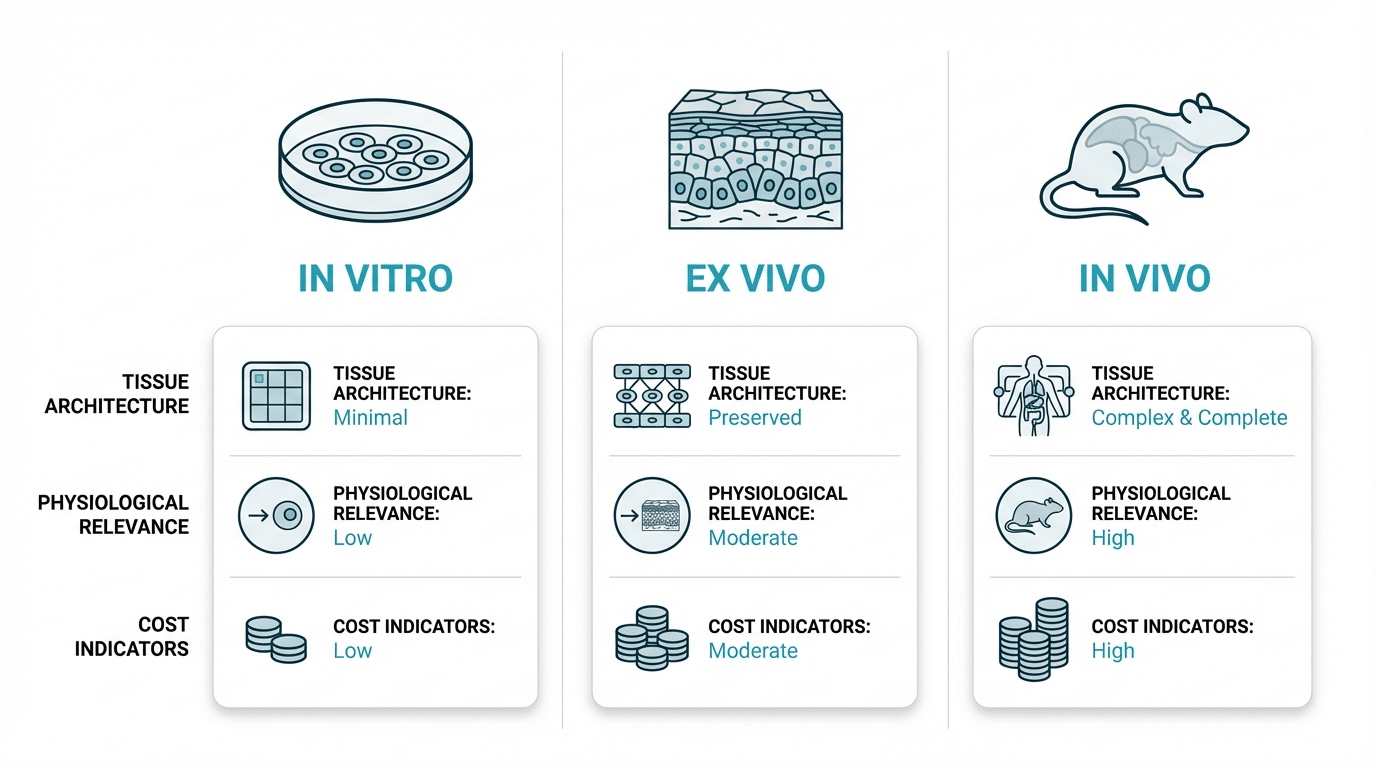
When you need to understand how your compound interacts with a complex multicellular microenvironment—but you are not yet ready for the regulatory burden and expense of animal studies—an organ culture or tissue explant model fills the gap perfectly. To further understand the nuances between these models, including behavioral aspects, consult this detailed explanation by Da-Ta Biotech.
Three Main Types of Ex Vivo Models and When Each One Fits
Common ex vivo models fall into three broad categories: organ culture, tissue explants, and primary cell cultures derived from fresh tissue. Understanding when each applies is critical for experimental design.
Organ Culture
Maintains a fragment of an intact organ—retaining structure, ECM, and diverse cell populations. Ideal when penetration, diffusion, or multicellular cross-talk is central to the experiment.
Tissue Explants
Uses small pieces of tissue (such as patient-derived tumor fragments) preserving native microenvironment, morphology, and viability. Excellent for heterogeneous response evaluation.
Primary Cell Cultures
Extracted from fresh tissue, offering higher experimental control and compatibility with high-throughput formats—though tissue context is sacrificed in the process.
Patient-derived explants (PDEs) have emerged as a particularly powerful preclinical platform for anti-cancer drug and biomarker discovery because they maintain the architectural and microenvironmental features of the original tumor. Precision-cut tissue slices, another organotypic approach, allow for the study of complex tissue interactions while providing consistent slice-to-slice geometry.
What Can You Actually Measure in an Organ Culture Model?
An organ culture model keeps organ or tissue fragments viable in a supportive culture environment for a defined period—typically hours to several days—during which functional and molecular responses can be recorded.
📊 Available Readouts
- Histology & IHC: Structural and protein-level changes
- qPCR & Western Blot: Gene and protein expression
- ELISA & Cytokine Panels: Secreted factors measurement
- Permeability & Metabolic Assays: Barrier and metabolic function
This model is preferred over isolated cells whenever the ECM, multicellular responses, or penetration/diffusion dynamics are critical to the experimental question. Short-term organ cultures provide high physiological relevance while remaining practical to execute within a CRO setting.
Why Tissue Explant Assays Excel at Capturing Heterogeneous Responses
A tissue explant assay utilizes live tissue pieces to test responses to substances, formulations, or treatments while preserving the local microenvironment. What makes this approach uniquely valuable is its ability to capture heterogeneous responses within the same piece of tissue—something that is impossible in a homogeneous cell-line system.
“Patient-derived tumor explants maintain the tumor microenvironment, including stromal and immune components, enabling researchers to evaluate treatment response in a context that closely mimics the patient’s own biology.”
— Preclinical Development Best Practices
This makes PDEs excellent preclinical tools for biomarker and drug discovery. Multiple experimental conditions (dose-response, time-course, or comparative treatments) can be run on pieces from the same tissue, reducing inter-donor variability and increasing the statistical power of each experiment.
Choosing the Right Readouts for Your Ex Vivo Assay
Functional, Molecular, and Morphological Endpoints
Readouts from an ex vivo assay should be driven by two factors: the mechanism of action of your compound and the development decision the data must support.
✓ Pro Strategy
Define one primary endpoint that directly answers your hypothesis and two to three supportive endpoints that reduce ambiguity. Combining a viability assay with a cytokine panel and histological scoring provides a robust, multi-dimensional picture.
For a deeper review of endpoint assays using surrogate biomarkers in patient-derived ex vivo cultures, see this comprehensive resource.
From Brief to Report — The Workflow for Ex Vivo Assay Services in Israel
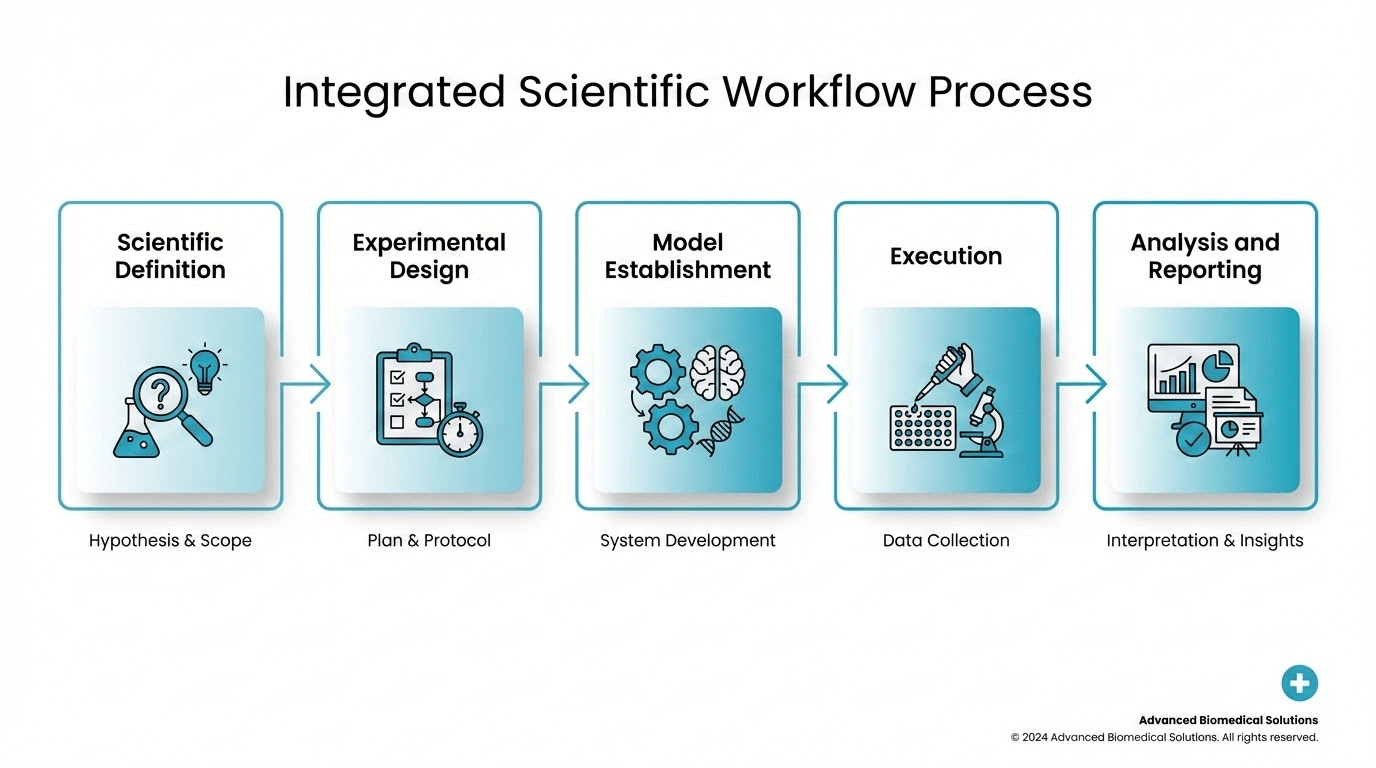
Understanding the workflow helps you plan timelines, budgets, and deliverables. The typical process at a specialized CRO follows a structured sequence designed to maximize data quality and actionability.
📋 Recommended Deliverables
For commercial clients: raw data with processed tables, detailed protocol description, QC checkpoint documentation, and—critically—“what to do next” actionable conclusions. Every report should drive the next decision in your development program, not simply present numbers.
Typical Turnaround Time — What to Expect and What Slows Things Down
Standard ex vivo assay projects typically require a few weeks from protocol approval to final report. However, several factors can extend the timeline:
- Method development or model optimization — especially for novel tissue types — adds time at the front end
- Complex readouts such as histology, immunostaining, or multiplex assays require additional processing time
- Fresh tissue availability can introduce scheduling constraints
Research shows that dynamic physiological culture of ex vivo human tissue achieves a median successful culture duration of approximately eight days, though the range spans from hours to several weeks depending on tissue type and culture system. Precision-cut liver slices, for example, can maintain viability for around 72 hours, providing a reliable window for gene expression and functional readouts.
What Determines the Cost of an Ex Vivo Assay Service?
The cost of ex vivo assay services is driven by the complexity of the experiment rather than a flat price list. The main variables include:
Number of Conditions & Dosages
More experimental arms = more resources and analysis time
Biological Replicates
Number of donors or tissue samples affects statistical power and cost
Tissue Type & Sourcing
Rare tissues or complex sourcing logistics increase costs
Analytical Depth
Single endpoint vs. multiplexed analysis with histology
💡 Cost Optimization Strategy
Start with a focused pilot to demonstrate a signal, then design an expanded study based on the pilot findings. This approach reduces the risk of committing a large budget to an unvalidated model.
A Common Mistake: Skipping Quality Controls in Ex Vivo Studies
Reproducibility in ex vivo models depends on rigorous protocol standardization and quality control at every stage. The most frequent failure points include:
⚠️ Common Failure Points
- Reduced tissue viability before treatment begins
- High inter-sample heterogeneity
- Batch effects across experiments
- Microbial contamination
Critical QC measures include tissue acceptance/rejection criteria (defining minimum viability thresholds before treatment), contamination checks, documentation of time from tissue retrieval to culture initiation, and the use of positive controls to verify system responsiveness.
At Da-Ta Biotech, ISO 9001:2015-certified processes ensure that every experiment follows a validated, well-documented protocol. This means that when you receive a report, you can trust the data behind it—and so can regulators and investors.
Beyond Drugs: Ex Vivo Assays for Medical Devices, Materials, and Formulations
Ex vivo assays are not limited to pharmaceutical compounds. They are equally valuable for evaluating tissue responses to medical device materials, coatings, gels, creams, and novel formulations.
When a “near-real tissue” evaluation is needed—for instance, testing the inflammatory response to a biomaterial surface or measuring the permeability of a topical formulation through skin—ex vivo models provide physiologically relevant data that standard cytotoxicity assays on cell lines simply cannot deliver.
Measurable Endpoints for Medical Device Development
- Inflammatory cytokine release profiles
- Cytotoxicity and cell viability
- Morphological changes in tissue architecture
- Barrier function and permeability
This type of data can be instrumental in supporting pre-submission meetings with regulatory bodies and in strengthening your technical file before expensive animal testing or clinical trials.
Who Benefits Most from Ex Vivo Assay Services in Israel?
Ex Vivo Assay Services in Israel serve a broad range of clients across the biotechnology ecosystem:
Biotechnology Startups
De-risk early-stage projects with physiologically relevant data before approaching investors. Generate compelling proof-of-concept data for Series A presentations.
Pharmaceutical Companies
Rapidly screen candidates and optimize lead compounds using tissue-level efficacy data before committing to expensive in vivo studies.
Academic Research Groups
Test hypotheses in complex biological systems without the overhead of maintaining animal colonies or extensive infrastructure.
Israel’s dense biotech ecosystem—with its concentration of startups, hospitals, and research institutions—creates a unique advantage: proximity to clinical tissue sources, experienced scientific talent, and regulatory familiarity. Da-Ta Biotech, operating from Science Park Rehovot and serving clients across the biotechnology industry, provides a practical example of how a local CRO can offer short communication loops and rapid iteration on experimental design. Learn more about their R&D services and cell-based assays at Da-Ta Biotech’s main page.
Ethical and Regulatory Landscape for Ex Vivo Studies in Israel
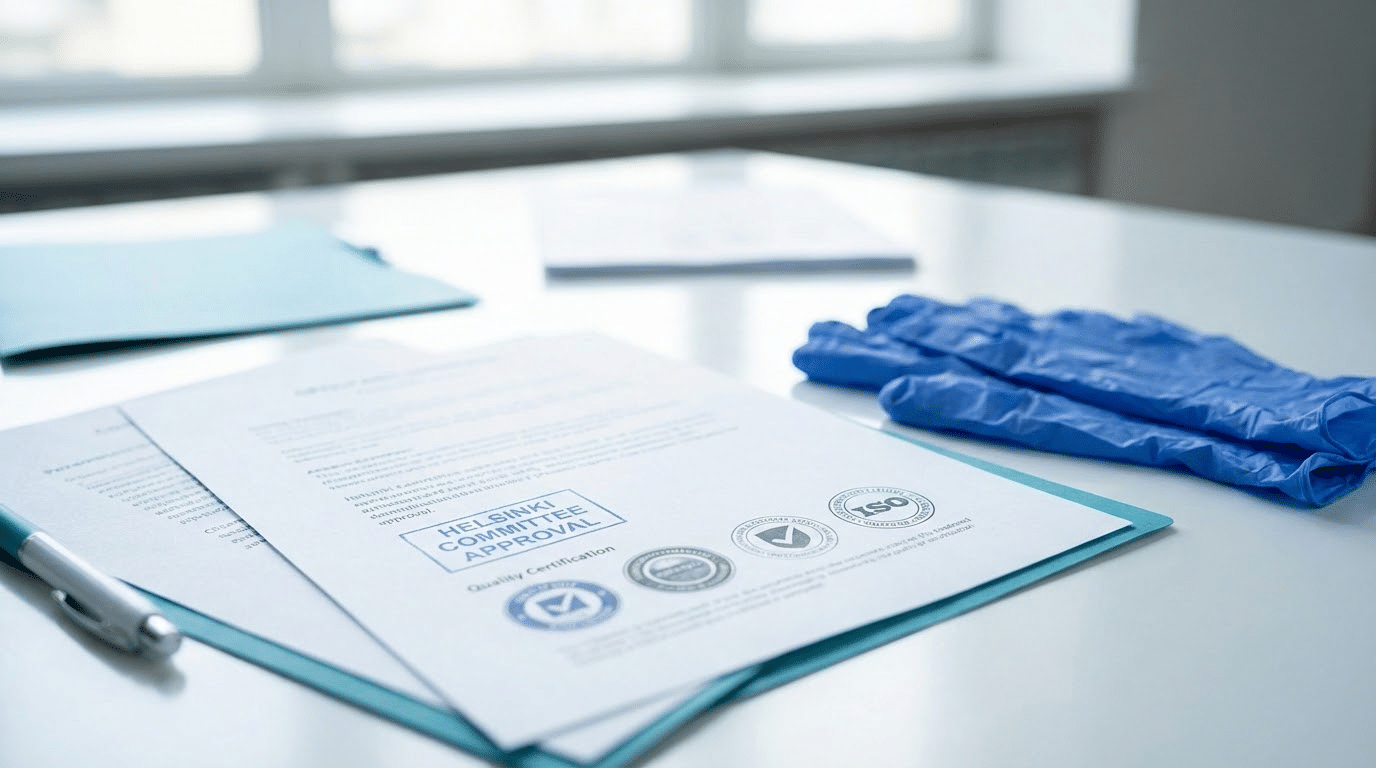
Human Tissue: Helsinki Committees and the Cells and Tissues Unit
Ex vivo studies involving human tissues in Israel require compliance with the Ministry of Health’s regulations concerning medical research and human tissue handling. For clinical samples—such as biopsies or surgical resections used in research—Helsinki committee approval is mandatory.
The Ministry of Health’s Pharmacy Division, through its Cells and Tissues Unit, oversees the regulation and supervision of human-derived cells and tissues, providing procedures and guidelines for quality and safety. Internationally, the term “human ex vivo tissue” is recognized within regulatory frameworks such as the FDA’s guidance on tissue culture media for human ex vivo tissue processing.
Animal Tissue and the 3Rs Principles
For animal-derived tissues, adherence to Israel’s Animal Welfare Law and the guidelines set by the Council for Animal Experimentation is required. Importantly, ex vivo studies align with the internationally recognized 3Rs principles—Replace, Reduce, Refine—by providing alternatives or reducing the need for in vivo animal experiments.
🌿 3Rs Alignment
A single animal can yield multiple tissue samples for parallel ex vivo experiments, maximizing the data obtained while minimizing the number of animals required.
Working with a CRO that has comprehensive understanding of these regulatory pathways ensures that your study is compliant from the outset—preventing costly delays due to missing approvals or documentation gaps.
Scenario: A Startup Needs Translational Data Before a Series A Round
📋 Case Study Scenario
Imagine a dermatology-focused startup with a novel peptide-based formulation. The founding team has promising in vitro cytotoxicity and potency data from 2D cell cultures, but investors want evidence that the peptide penetrates human skin and modulates inflammation at the tissue level.
The challenge: An in vivo study in a validated animal model would cost tens of thousands of dollars and take months to plan and execute.
The solution: An ex vivo human skin model—using ethically sourced surgical skin samples—can provide permeability data (Franz cell diffusion), histological evidence of tissue integrity, and cytokine profiling of the inflammatory response, all within a few weeks.
This is the kind of scenario where a CRO like Da-Ta Biotech adds practical value: the team designs a focused pilot with clear endpoints, executes rapidly using robust protocols, and delivers a report that directly addresses investor questions. No over-engineered study. No ambiguous data.
Benchmarks and Metrics: How Long Does Ex Vivo Tissue Actually Survive in Culture?
A systematic review of dynamic physiological culture of ex vivo human tissue reported a median successful culture duration of approximately eight days, though the range is wide—from several hours to more than two weeks, depending on the tissue type, perfusion system, and culture conditions.
These windows define the practical limits of what can be measured. Short-lived cultures are sufficient for acute toxicity, permeability, and cytokine release experiments. Longer-duration cultures enable studies of chronic exposure, metabolic activity, and cell turnover. Understanding these benchmarks is critical when designing your study protocol and selecting the right model for your question.
Why Choose Da-Ta Biotech for Ex Vivo Assay Services in Israel?
Da-Ta Biotech provides specialized Ex Vivo Assay Services in Israel, combining deep scientific expertise with a practical, results-oriented approach. The company serves as a β-site for R&D—an extension of your own research team, not just a service provider.
🔬 Deep Scientific Expertise
Experienced R&D experts proficient in developing, validating, and executing complex organ culture and tissue culture models
📋 Customized Experimental Design
No fixed menu of assays—the scientific team works with you to define the hypothesis, select the optimal model, and determine actionable readouts
✓ ISO 9001:2015 Certified
Quality management systems ensure data that is scientifically robust and aligned with regulatory and business milestones
This consultative approach—combined with transparent project communication—means you receive data that is not only scientifically robust but also aligned with your regulatory and business milestones. For additional background on the fundamentals of tissue culture models and their in vitro cultivation, this resource provides useful context.
Frequently Asked Questions
Ready to discuss how an ex vivo assay could accelerate your development program?
Whether you are at proof-of-concept stage or optimizing a lead candidate, scientific challenges are what Da-Ta Biotech’s team is built for.