
Clinical Biochemistry Services in Israel: A Practical Guide for Biotech, Pharma, and Research Teams
Expert Insight from Dr. Rinat Borenshtain-Koreh (25+ Years in Biotech R&D): The quality of your biochemical data determines whether your drug candidate advances or stalls. After supporting hundreds of R&D projects through regulatory submission, I’ve seen firsthand how choosing the right laboratory partner transforms outcomes. This guide distills that experience into actionable criteria for selecting clinical biochemistry services in Israel.
Clinical biochemistry stands at the intersection of molecular science and real-world medical decision-making. Whether you are developing a new drug candidate, running a clinical trial, or validating a biological product, the quality and reliability of your biochemical data can determine the trajectory of your entire project. In Israel’s growing biotech ecosystem, access to experienced, well-equipped laboratories is not a luxury — it is a necessity. Da-Ta Biotech, operating from the Science Park in Rehovot under ISO 9001:2015, provides clinical biochemistry services designed to support R&D teams from proof-of-concept through regulatory submission.
What Are Clinical Biochemistry Services in Israel and Who Are They For?
Clinical biochemistry services encompass the chemical and biological testing of samples — blood, urine, bodily fluids, and sometimes tissues — to generate actionable data for diagnosis, treatment monitoring, research and development, and clinical trial support. In Israel, these services must adhere to local quality frameworks and, depending on the application, international regulatory requirements.
The scope is broad: biochemical panels, metabolic markers, therapeutic drug monitoring (TDM), inflammation markers, endocrine markers, and specialized analyte quantification. The commercial audiences for these services include biotech and pharma companies, academic research institutions, private clinics, clinical trial managers, and quality assurance teams — anyone who needs validated biochemical data to move a project forward.
Da-Ta Biotech serves as a β-site for R&D, providing these analytical capabilities to organizations that need a trusted external laboratory partner rather than building costly in-house infrastructure.
What Tests Are Typically Included in Clinical Biochemistry?
The spectrum ranges from routine automated chemistry tests to highly specialized analyses. On the routine side, you find liver and kidney function panels, electrolytes, lipids, glucose, enzymes, and blood proteins — the building blocks of a comprehensive metabolic panel (CMP). These high-throughput tests are well-established and standardized, often used for general health screening or baseline monitoring in clinical studies.
On the advanced end, chromatographic and mass spectrometry methods (HPLC, LC-MS/MS) enable accurate measurement of drugs, their metabolites, and specialized markers at very low concentrations. These techniques are essential when routine immunoassays lack the specificity or sensitivity a project demands.
What Is the Practical Difference Between Routine and Advanced Tests?
Routine tests rely on automated analyzers capable of processing hundreds of samples per day. They measure common markers at well-defined concentration ranges. Advanced tests, by contrast, require specialized instrumentation, longer sample preparation, and method-specific validation. The payoff is higher specificity and sensitivity — critical when quantifying a drug candidate in plasma at nanogram-per-milliliter levels or differentiating between structurally similar metabolites.
How Do Clinical Biochemistry, Medical Biochemistry, and Biochemistry Differ?

These terms overlap, but context matters. Clinical biochemistry and medical biochemistry both apply biochemical principles to medical needs — diagnosis, patient monitoring, and therapeutic decision-making. The distinction is largely semantic: “clinical biochemistry” is more common in laboratory and hospital settings, while “medical biochemistry” appears frequently in academic curricula.
Biochemistry as a broader discipline also includes basic research, industrial enzymology, and agricultural applications that have nothing to do with patient care. In a commercial context in Israel, the practical difference impacts sample types, documentation requirements, quality controls, report formats, and regulatory compliance. Da-Ta Biotech focuses on the applied aspects — the science that directly serves product development, clinical trials, and regulatory submissions.
What Happens When Protein Analysis Meets Clinical Biochemistry?
Protein analysis is a set of tests for characterizing, quantifying, and verifying proteins — their identity, concentration, purity, and stability. In medical research and quality control of biological products, these tests are indispensable. Target protein verification, batch-to-batch comparison, stability testing, and monitoring degradation or aggregation all fall under this umbrella.
The bridge to clinical biochemistry is direct: protein markers such as antibodies, enzymes, and acute-phase reactants are central to diagnostics and therapeutic monitoring. A pharmaceutical company developing a monoclonal antibody therapy, for example, needs robust protein analysis at every stage — from early characterization through clinical sample analysis.
What Deliverables Should You Expect from Protein Analysis?
A reliable lab provides detailed reports, chromatograms, spectra, quantitative data tables, and often raw instrument files for independent client review. Da-Ta Biotech structures its output to be comprehensive and audit-ready, so your data can support regulatory filings without additional processing. For more specific details on protein analysis techniques, read the blog post on Protein Assay: Advancing Research Solution.
💡 Expert Tip: When selecting a protein analysis provider, always request sample reports upfront. The level of detail in documentation directly reflects how well your data will withstand regulatory scrutiny. Look for comprehensive methodology descriptions, calibration curves, and clear acceptance criteria.
Five Mistakes to Avoid When Choosing a Clinical Biochemistry Provider
Selecting a laboratory partner based solely on price or proximity often leads to repeated assays, lost time, and compromised data. Here are the mistakes research teams make most frequently when choosing clinical biochemistry services in Israel:
- 1. Ignoring method validation status. A lab may offer a test, but has the method been validated for your specific matrix and concentration range? Always ask.
- 2. Overlooking quality system documentation. Without proper traceability and deviation management, results may not withstand regulatory scrutiny.
- 3. Failing to define success criteria upfront. If you and the lab disagree on what constitutes a reportable result, delays are inevitable.
- 4. Underestimating logistics. Sample integrity depends on proper collection, preservation, and transport — not just on the analytical run.
- 5. Not requesting a pilot run. For complex or novel assays, a small-scale pilot helps identify issues before committing to full-scale analysis.
Learn more about Da-Ta Biotech’s approach and commitment to quality on the About Us page.
Quality and Accreditation Standards That Actually Matter
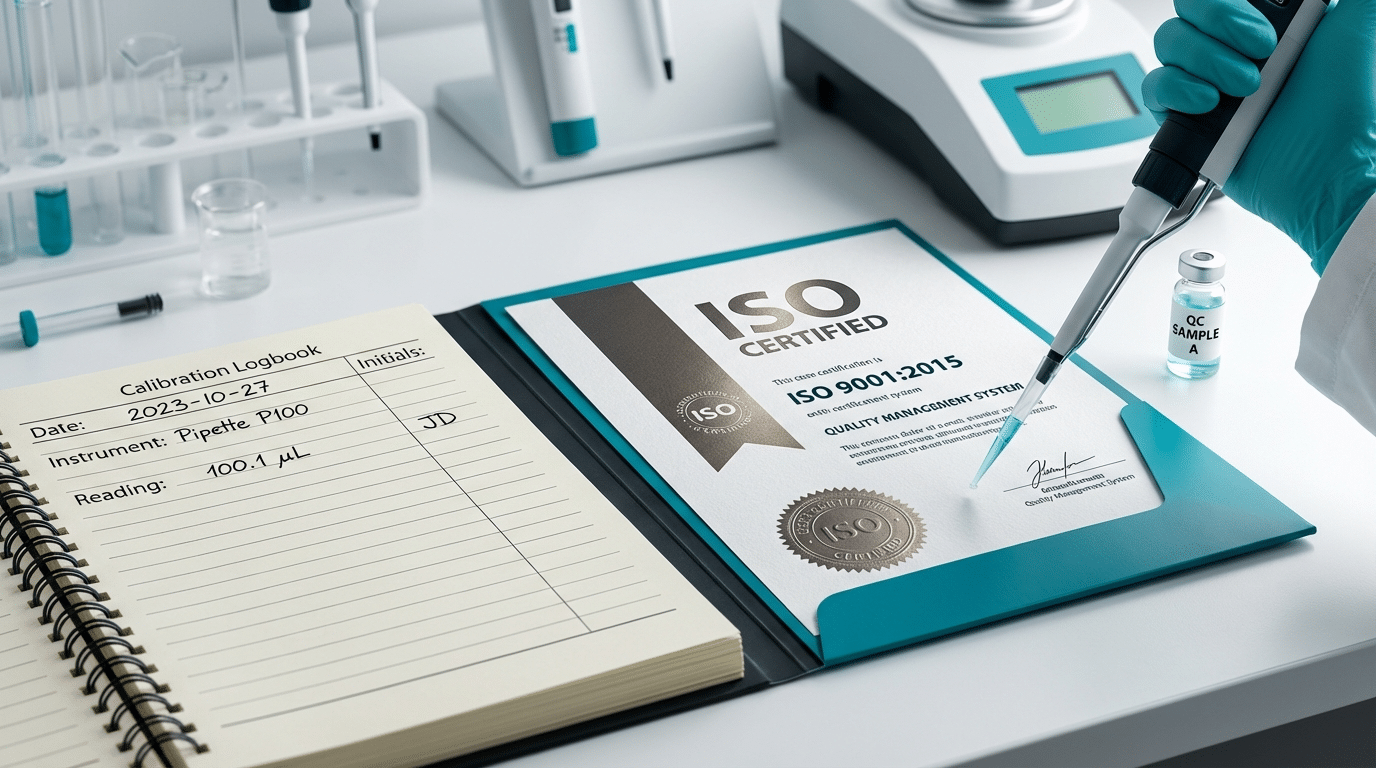
Reliable clinical biochemistry services depend on a structured quality system: documented procedures, validated methods, internal and external controls, calibration records, and clear deviation management. Lab results influence clinical decisions, shape research conclusions, and determine whether trial data are accepted by regulators. The stakes are high.
Key standards to verify include ISO 15189 (Medical laboratories — Requirements for quality and competence), which addresses everything from personnel competence to measurement uncertainty. Da-Ta Biotech operates under ISO 9001:2015, ensuring that every step — from sample receipt to final report — follows documented, auditable processes.
Method Validation — What Does It Mean for You as a Client?
Method validation confirms that a test performs as intended for a specific application. Parameters include accuracy, precision, linearity, limits of detection and quantitation, and robustness. For the client, this translates to confidence: the number on the report reflects reality, not an artifact of the instrument or procedure. Without validation documentation, your data may be questioned during peer review or regulatory submission.
📋 Methodology Box: Validation Parameters to Request
- Accuracy: How close results are to true values
- Precision: Repeatability and reproducibility
- Linearity: Reportable range of the method
- LOD/LOQ: Detection and quantitation limits
- Robustness: Stability under varying conditions
Turnaround Time: Setting Realistic Expectations
Turnaround time (TAT) for clinical biochemistry tests in Israel depends on the test type, current workload, logistics, and sample complexity. Routine panels on automated analyzers can often be completed within 24 hours of sample receipt. Specialized analyses — particularly those requiring LC-MS/MS or custom method development — may take days to weeks.
The most effective approach is to define a Service Level Agreement (SLA) before starting work. Specify sample receipt windows, processing time, report delivery, and what constitutes an “urgent” request. For medical biochemistry applications where patient management depends on timely results, this agreement is especially critical. Da-Ta Biotech works with clients to establish clear timelines at the project planning stage, reducing surprises and aligning expectations.
A Scenario: From Initial Quote to Final Report
Imagine you are a biotech company with a new compound entering Phase I clinical trials. You need pharmacokinetic data from patient plasma samples. How should the workflow look?
Step 1: Define Objectives
Characterize the test objective and success criteria with the lab. What analyte, what concentration range, what precision do you need?
Step 2: Matrix Agreement
Define the matrix (plasma, serum, whole blood) and agree on storage and handling conditions.
Step 3: Logistics Planning
Plan shipping logistics — packaging, temperature control, chain of custody documentation.
Step 4: Analytical Run
The lab executes the analytical run with appropriate calibrators and quality controls.
Step 5: Report Delivery
A QA-reviewed report is generated, including methodology description, results, and any flagged deviations.
What Needs to Be Prepared in Advance?
Detailed requisition forms, sample identification and labeling protocols, desired reference ranges, units for reporting, and any client-specific requirements (e.g., blinded sample coding for trials). The more complete your initial documentation, the faster the lab can begin work and the fewer queries will delay results.
Sample Types and Preservation — Where Most Errors Happen
Common samples in clinical biochemistry include blood (serum and plasma), urine, cerebrospinal fluid, and other bodily fluids. The quality of results depends directly on pre-analytical factors: collection technique, choice of anticoagulant (EDTA, heparin, citrate), time to centrifugation, storage temperature, and transport conditions.
Preservation methods vary by analyte. Some markers are stable at 2–8°C for days; others degrade within hours unless frozen at −20°C or −80°C. Understanding the biochemistry of your target analyte is the first step in preventing pre-analytical error. National health authorities in Israel oversee blood collection training and provide guidelines for biological material transport.
Shipping and Logistics — Ensuring Sample Integrity
Proper packaging (triple packaging per UN 3373 for Category B biological substances), temperature control with cold packs or dry ice, and adherence to transport regulations are non-negotiable. The WHO guidance on transport of infectious substances (2023–2024) provides an internationally recognized framework. Da-Ta Biotech coordinates sample logistics with clients, offering guidance on packaging, temperature monitoring, and documentation to ensure that what arrives at the lab is representative of what was collected.
How Advanced Analytical Techniques Expand What Is Possible
LC-MS/MS and HPLC are not just “fancy instruments.” They solve specific problems that routine analyzers cannot. Quantifying analytes at picogram or low-nanogram levels, differentiating structural isomers, multiplexing dozens of analytes in a single run, and measuring post-translational modifications on proteins — these capabilities are essential for modern clinical biochemistry and medical biochemistry applications.
In therapeutic drug monitoring and toxicology, mass spectrometry-based methods offer advantages in specificity that immunoassays often cannot match, particularly for analytes with structurally similar cross-reactants.
Why Do Biotech and Pharma R&D Teams Need These Methods?
Drug candidate characterization, biomarker discovery, and pharmacokinetic/pharmacodynamic studies all require analytical precision that goes beyond routine panels. Accurate data at this stage directly determines whether a compound advances to the next development phase — or is abandoned based on flawed measurements. These advanced biochemistry applications form a core part of what Da-Ta Biotech provides to its pharma and biotech clients.
“The difference between success and failure in early drug development often comes down to analytical precision. A method that can’t distinguish between your compound and its metabolites will generate data that misleads rather than informs.”
— Industry perspective on analytical method selection
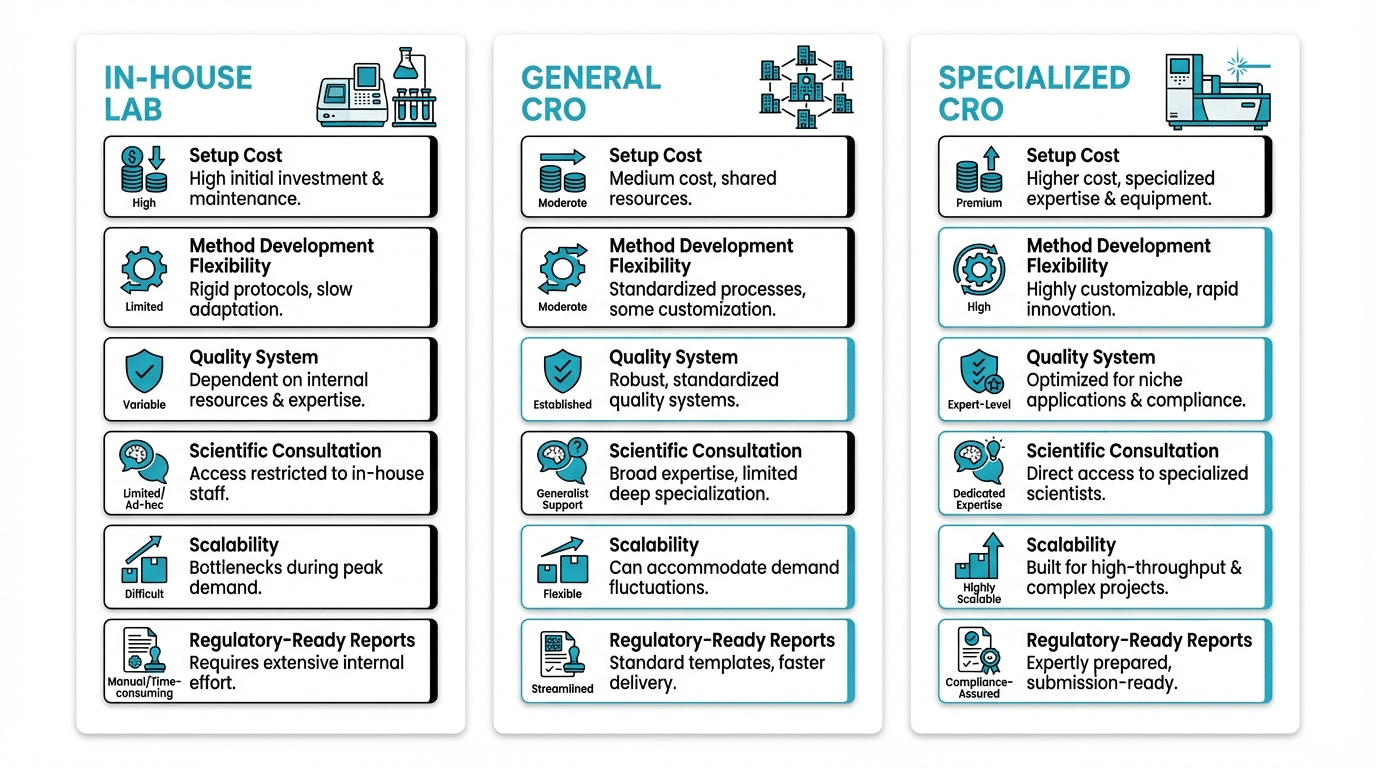
Comparing Key Criteria Across Clinical Biochemistry Service Models
What Support Does Da-Ta Biotech Offer for Clinical Trials and Research?
Da-Ta Biotech provides comprehensive support across the clinical trial lifecycle: custom assay development, method validation according to regulatory guidelines, routine sample analysis for biomarkers and drug levels, and robust data reporting. The company’s scientists work as research partners — not just service executors — engaging with the scientific question behind each project.
This approach matters because clinical biochemistry services for trials require more than just running samples. Method suitability must be demonstrated, stability of the analyte in the chosen matrix must be confirmed, and reports must meet the documentation standards expected by ethics committees and regulatory authorities. Da-Ta Biotech’s team, experienced in cell-based assays, protein analysis, and molecular biology, brings a multidisciplinary perspective that strengthens the analytical strategy for each study. Relevant research on biochemical and physiological assay design can be found in publications such as this study on biochemical and physiological profiling (PMC).
✓ Three Practical Advantages of Working with Da-Ta Biotech
- End-to-end project design: Work with scientists to define the right analytical approach before processing begins.
- Flexible capacity for R&D timelines: Scale effort up or down as development milestones shift — no fixed volume commitments.
- Audit-ready documentation under ISO 9001:2015: Every protocol and record organized for regulatory review.
Industry standards and developments in this domain are regularly discussed in journals such as Nature Biotechnology.
Frequently Asked Questions
Ready to Define Your Analytical Strategy?
What biochemical data does your next project milestone require — and how confident are you that your current analytical approach will deliver it? Whether you need routine panels, advanced LC-MS/MS quantification, or custom protein analysis, the first step is a focused conversation about your specific scientific challenge. Da-Ta Biotech’s team of experienced R&D scientists is here to help you plan, execute, and interpret.