
Microbiology Testing Laboratory in Israel — A Practical Guide for Businesses, R&D Teams, and Quality Managers
Dr. Rinat Borenshtain-Koreh, with 25+ years leading biotech R&D laboratories: “The difference between a microbiology lab that simply processes samples and one that solves problems lies in scientific methodology. When contamination strikes or regulatory deadlines loom, you need a partner who understands your industry — not just your test request.”
🔬 Exclusive Industry Insight
Every product reaching consumers — food, cosmetics, medical devices, or pharmaceuticals — must meet strict microbiological safety criteria. This guide delivers the complete framework: what labs do, how to select one, which tests matter, and how to streamline the process from sample collection to final report. Whether you’re navigating Israeli regulations, international standards, or customer specifications, this resource covers it all.
What Is a Microbiology Testing Laboratory in Israel and Who Needs It?
A microbiology testing laboratory in Israel identifies, enumerates, and characterizes microorganisms — bacteria, yeasts, molds, and sometimes viruses — across diverse matrices. These matrices include finished products, raw materials, water systems, production surfaces, and cleanroom environments. The core objective is straightforward: determine whether a sample meets predefined microbiological limits according to Israeli regulations, international standards, or customer specifications.
Common tests performed in a microbiology lab include total aerobic plate counts, pathogen detection (such as Salmonella or Listeria screening), environmental monitoring of production facilities, and sterility testing for injectable or implantable products. Israel’s national public health laboratories conduct both chemical and microbiological analyses according to Israeli and international standards — or accepted methods when formal standards are absent.
Who Benefits Most from Microbiology Testing?
- Food manufacturers and importers — Ministry of Health compliance
- Cosmetics companies — preservative efficacy validation
- Pharmaceutical firms — stability and release testing
- Medical device developers — bioburden confirmation
- R&D laboratories — antimicrobial compound exploration
Da-Ta Biotech, for instance, provides an R&D bacteriology service that supports biotechnology and biomedical companies from early proof-of-concept through investor-ready demonstrations — serving as a scientific partner rather than a routine testing vendor.
How to Choose a Microbiology Testing Laboratory in Israel That Fits Your Business
Selecting the right microbiology testing laboratory in Israel is not a one-size-fits-all decision. The first criterion is industry specialization. A lab experienced in pharmaceutical sterility testing operates under different protocols than one focused on food-contact surface monitoring. Matrix expertise matters: testing a viscous cream for preservative effectiveness requires different sample preparation than screening powdered infant formula for Cronobacter.
Beyond specialization, evaluate accreditation scope — not just whether the lab holds a certificate, but which specific tests fall within that accredited scope. Check turnaround time (TAT) commitments, especially if your business faces periodic surges (seasonal production, product launches). Assess logistics: does the lab offer sample pickup, or must you arrange courier services? And critically, verify the lab’s capacity to handle atypical urgent events — a contamination incident on a Friday afternoon demands a partner that can respond, not a facility that only processes routine queues.
For companies in pharma and biotech R&D, the ability to customize assay design is essential. About Da-Ta Biotech — this CRO-style laboratory operates under ISO 9001:2015 and employs experienced R&D experts who adapt protocols to the specific scientific question, rather than offering only a fixed menu of catalog tests.
What Questions to Ask Before Requesting a Quote?
🎯 Four Critical Questions for Lab Selection
- “Which tests do you recommend for my specific product or process?” — A competent lab will ask about your matrix, intended use, and regulatory context before answering.
- “What is the estimated TAT for each test, and how do you define ‘urgent’?” — Some labs charge a premium for rush processing; others simply cannot accommodate it.
- “What does your report include?” — A useful report provides method references, acceptance criteria, raw data, and a clear pass/fail statement.
- “How do you handle out-of-specification results?” — Immediate notification versus final report can save you critical days during a contamination event.
What Types of Microbiological Tests Exist — and Which Services Are Most in Demand?
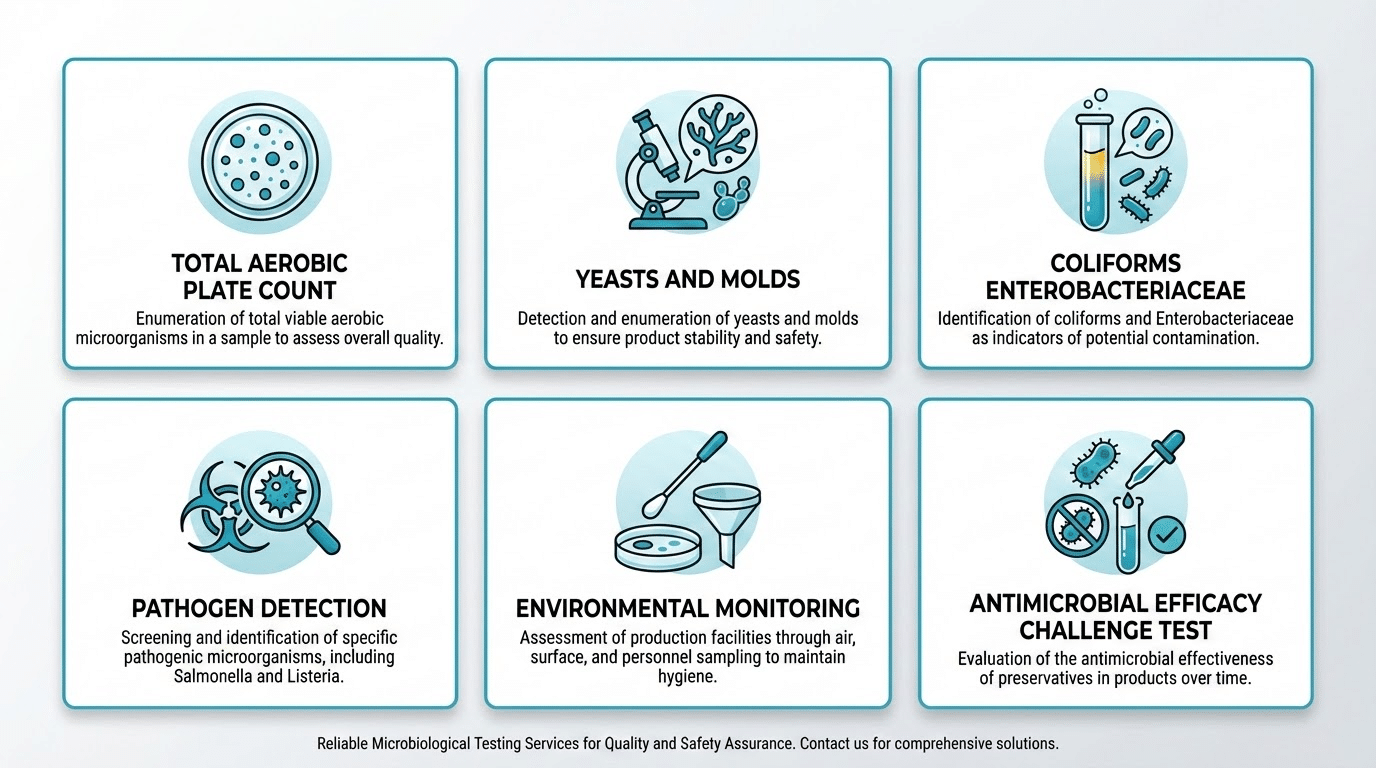
Microbiological tests broadly fall into two categories. Hygiene indicators — total plate counts, yeasts and molds, coliforms, Enterobacteriaceae — provide a snapshot of how clean a product, environment, or process really is. They do not necessarily indicate danger, but they flag trends. A rising total count over consecutive production batches, for example, signals a cleaning protocol failure long before a pathogen appears.
Pathogen detection targets specific organisms that pose a direct health risk. These tests are often qualitative — “detected” or “not detected” in a defined sample size — though quantitative methods exist when regulations demand enumeration. Beyond these two pillars, labs also perform environmental monitoring (settle plates, air sampling, surface swabs), isolate identification using biochemical or molecular methods, and industry-specific assays such as endotoxin testing for medical devices or challenge testing for cosmetics.
Total Plate Count vs. Yeasts and Molds vs. Coliforms — Why Each One Tells a Different Story
Total Plate Count (TPC)
Reflects the general microbial population. Think of it as a census: it does not identify who is there, only how many. A high TPC may indicate inadequate heat treatment, poor raw material quality, or improper storage — but it does not tell you whether pathogens are present.
Yeasts and Molds
Cultured under conditions favoring fungal growth. Their presence often points to post-process contamination, packaging integrity failures, or preservative breakdown. Particularly relevant in cosmetics, where mold can degrade active ingredients and alter product appearance.
Coliforms
Function as a classic hygiene barometer. Because many coliform species originate from the intestinal tract, their presence suggests potential fecal contamination or inadequate sanitation. Monitoring helps identify cleaning breakdowns before pathogenic organisms gain a foothold.
“These three tests together form the minimum surveillance package that most quality programs require. They establish baseline hygiene status before pathogen-specific testing becomes necessary.”
— Industry Best Practice
When Are Pathogen Tests Mandatory — and How Should You Define Testing Frequency?
Pathogen testing is typically mandated by regulation, customer requirement, or internal food safety / quality programs. Ready-to-eat products carry the highest testing burden because there is no further kill step between production and consumption. Sensitive raw materials — such as spices, herbs, and nut-based ingredients — are also frequent targets because they are known pathogen vehicles. Production lines with inherent cross-contamination risks (shared equipment, adjacent processing zones) add another layer.
⚠️ Critical Consideration
Israel’s committee for evaluating alternative microbiological methods for food has recognized the evolution from traditional culture-based detection — which can require extended incubation, isolation, and confirmation steps — to rapid immunological and molecular approaches. Regardless of method, testing frequency should be determined by a documented risk analysis.
High-risk products and processes warrant more frequent sampling; low-risk categories may require periodic verification only. The key is to link testing to your monitoring plan rather than testing randomly.
What Is Antimicrobial Testing and What Can Be Tested?
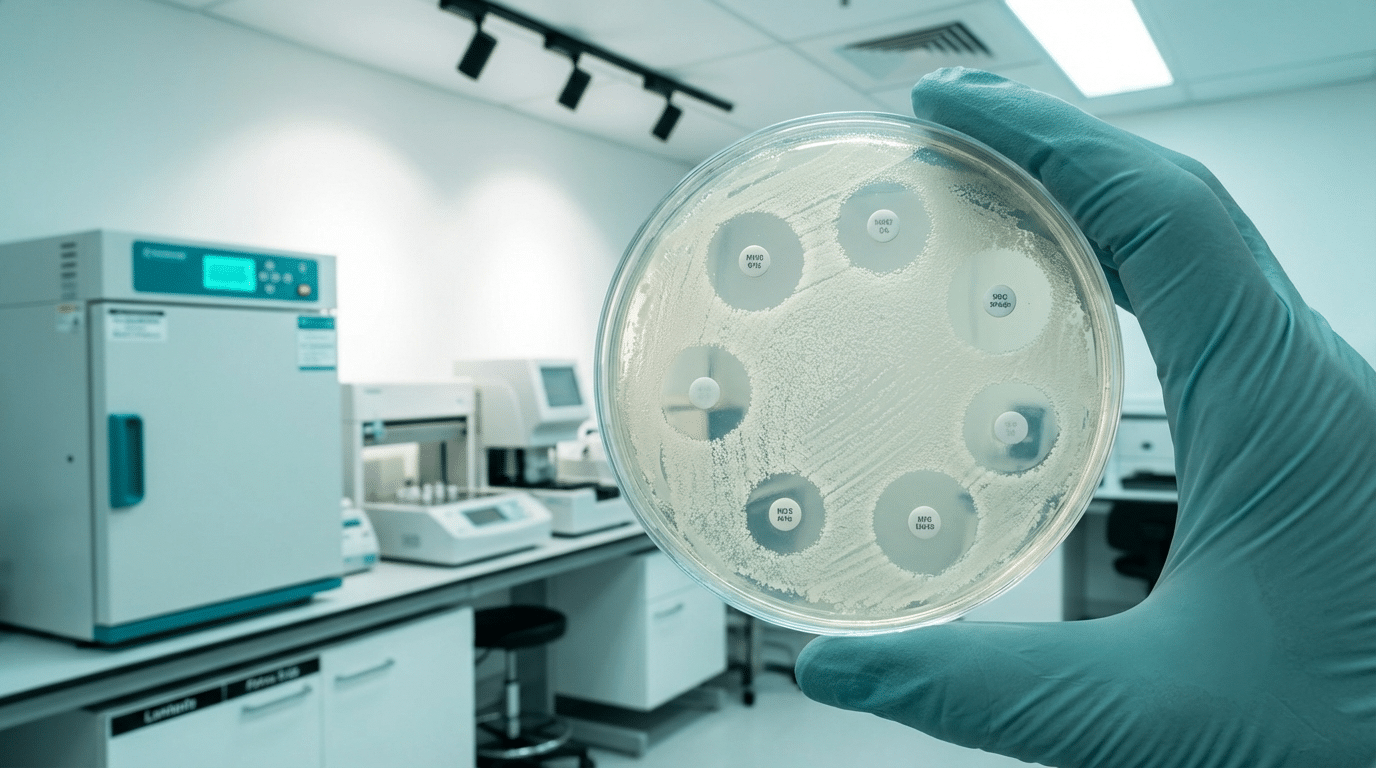
Antimicrobial testing determines how effectively a substance, product, or process inhibits or kills microorganisms under defined conditions. It is not limited to pharmaceuticals. Cosmetics companies use antimicrobial testing to validate preservative systems. Manufacturers of disinfectants, surface coatings, antimicrobial textiles, and hygiene solutions rely on these assays to substantiate marketing claims and meet regulatory thresholds.
Designing an antimicrobial test that produces meaningful data requires simulating real-world conditions as closely as possible. Contact time, concentration, temperature, organic load (soil), and target organism panel all influence the outcome. A disinfectant that kills bacteria in a clean test tube may perform very differently on a stainless-steel surface covered with food residue.
✅ R&D Laboratory Advantage
Da-Ta Biotech employs well-established cell-based assays and bacteriology tools that allow researchers to evaluate antimicrobial activity alongside other biological endpoints, providing a more complete picture of a compound’s behavior. Research on products of biotechnology increasingly relies on molecular tools that accelerate both detection and characterization timelines.
Efficacy Test vs. Susceptibility Test — A Practical Distinction
Efficacy Test
Evaluates whether a product “works” — does your sanitizer reduce a bacterial population by the required log reduction within the specified contact time? The answer is product-centered. Dominates consumer product and industrial disinfection space.
Susceptibility Test
Measures how sensitive a particular bacterial strain or clinical isolate is to a given antimicrobial agent. The answer is organism-centered. Common in clinical microbiology and pharmaceutical development.
What Do Bacteriology Services Include — and How Do They Differ from General Microbiology Testing?
Bacteriology services focus specifically on bacteria: isolation from complex matrices, phenotypic and genotypic identification, characterization of virulence or resistance markers, and sometimes susceptibility profiling. General “microbiology testing” casts a wider net, encompassing yeasts, molds, and related organisms alongside bacteria.
When Is Specialized Bacteriology the Right Choice?
Contamination investigations are a prime scenario. An unexplained spike in plate counts on a production line calls for:
- Isolating the dominant organism
- Identifying it to species level
- Tracing it back to a potential source — raw material, water system, operator, or environment
This kind of root cause analysis supports CAPA (Corrective and Preventive Action) processes and provides the evidence quality auditors demand.
Turnaround Time for Microbiology Tests in Israel — What Determines How Long You Wait
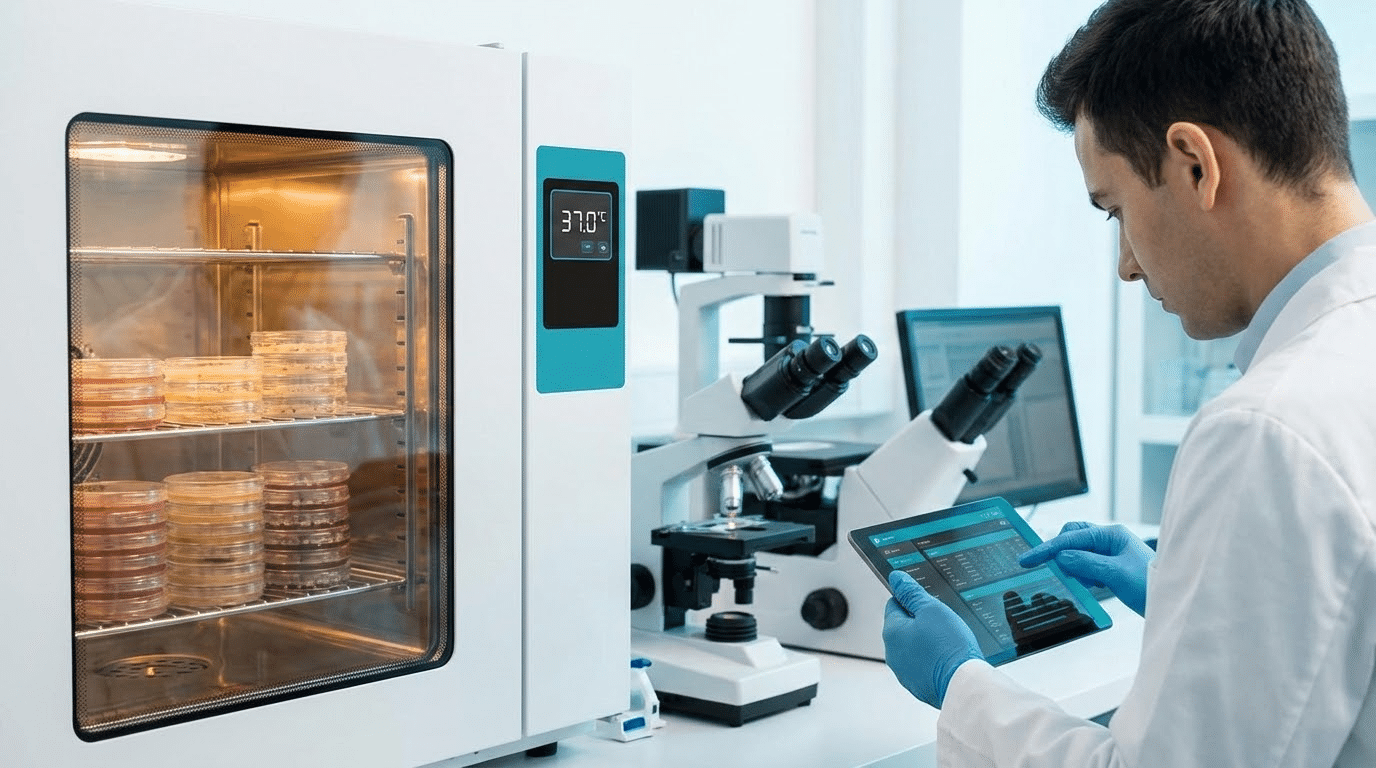
TAT in microbiology is fundamentally constrained by biology. Culture-based methods require incubation — bacteria need time to multiply to detectable colonies, and that time varies by organism and method. A standard total plate count typically requires 48–72 hours of incubation. Pathogen enrichment and confirmation can extend to 5–7 days using traditional protocols.
Rapid methods — PCR-based detection, immunoassay platforms, ATP bioluminescence — can shorten detection windows significantly, sometimes to same-day or next-day results. However, rapid does not always mean better: method validation status, regulatory acceptance, and the specific question you need answered all factor in.
How to Shorten Result Times Without Compromising Reliability
⚡ Three Practical Levers for TAT Optimization
- Plan your sampling schedule — samples arriving on a Thursday afternoon may not begin processing until Sunday
- Maintain strict temperature control — degraded samples produce unreliable results and may require re-testing
- Discuss method selection upfront — for screening, rapid molecular may suffice; for regulatory submissions, reference methods may be required
A Contamination Event Hits Your Production Line — What Happens Next?
Imagine receiving a routine test result showing an out-of-specification microbial count on a finished product batch. The clock starts ticking. Your quality team needs to know: Is this a systematic failure or an isolated incident? Is a specific pathogen involved? Can the batch be released, reworked, or must it be destroyed?
🔬 Case Study: Scientific Partner vs. Sample Processor
This scenario is where your relationship with the microbiology lab becomes critical. A lab that functions as a scientific partner — not just a sample-processing machine — can immediately:
- Isolate the suspect organisms
- Run identification
- Check against environmental monitoring data from previous visits
- Help map the contamination pathway
At Da-Ta Biotech, the approach to such challenges is rooted in R&D methodology: experienced researchers analyze the problem with the same rigor applied to drug development studies, connecting abnormal results to potential sources through systematic investigation rather than guesswork.
How to Send a Sample to the Lab — and What Must Appear on the Accompanying Form
Proper sample submission is the foundation of reliable results. Every sample shipped to a microbiology lab must be accompanied by complete documentation: product name, batch or lot number, matrix type, storage conditions, the specific tests requested, and the purpose of testing (routine monitoring, complaint investigation, release testing).
Chain of custody documentation — a record showing who collected the sample, when, under what conditions, and who transported it — is equally important. Israel’s Ministry of Environmental Protection requires a chain of custody form for industrial wastewater sampling reports, and the same principle applies to any regulated testing: traceability from sample point to lab bench protects the integrity of results.
⚠️ Common Errors Leading to Sample Rejection
- Sending insufficient volume or number of units
- Using non-sterile containers for microbiological samples
- Failing to maintain cold-chain during transport
- Omitting critical information on the submission form
Quick Sampling Checklist for the Business Client
Standards and Accreditations — What to Verify Before Trusting a Laboratory’s Results
A microbiology testing laboratory should operate under a recognized quality management system, and accreditation provides the formal evidence. In Israel, the national accreditation body is ISRAC (Israel Laboratory Accreditation Authority), which evaluates laboratories against internationally recognized standards. The most relevant standard for testing laboratories is ISO/IEC 17025, which specifies requirements for competence, impartiality, and consistent operation.
🔍 Key Accreditation Insight
Accreditation is not a blanket endorsement — it covers a defined scope of tests and methods. A lab may be accredited for total plate count in water but not for Salmonella detection in spices. Always request the lab’s accreditation schedule and confirm that your required tests appear within the scope.
Internationally, the ILAC Mutual Recognition Arrangement (MRA) ensures that accredited laboratories in signatory countries produce results accepted across borders. For Israeli businesses exporting products, this means test reports from an ISRAC-accredited lab carry weight with regulators and customers worldwide. Beyond accreditation, some industries require additional compliance — GMP (Good Manufacturing Practice) for pharmaceutical labs, GLP (Good Laboratory Practice) for certain preclinical studies, or FDA-aligned protocols for products destined for the US market.
Mapping Your Business Need to the Right Lab Capability
Five Mistakes That Delay or Invalidate Your Microbiology Test Results
❌ Mistake 1
Choosing the wrong test for the question. Requesting a total plate count when what you actually need is a specific pathogen screen wastes both time and budget. Define the purpose before selecting the method.
❌ Mistake 2
Ignoring transport conditions. A sample that arrives warm after spending hours in a delivery van does not reflect the product’s actual microbiological state. The data may be technically accurate — but practically meaningless.
❌ Mistake 3
Incomplete submission forms. Missing batch numbers, unspecified storage temperatures, or unclear test requests force the lab to contact you for clarification, adding days to your TAT.
❌ Mistake 4
Not verifying accreditation scope. An accredited lab is only accredited for the tests listed in its scope. Assuming “accredited” means “accredited for everything” can result in reports that regulators reject.
❌ Mistake 5
Treating the lab as a vending machine. The most valuable insights come from dialogue. Discuss your results with the lab’s microbiologists — especially when trends shift or unexpected organisms appear.
Frequently Asked Questions
🎯 Ready to Solve Your Microbiological Challenge?
Facing a microbiological challenge you’re not sure how to approach — whether it involves antimicrobial efficacy, bacteriology characterization, or designing a cell-based assay for a novel compound? Come to Da-Ta Biotech with your scientific question.