
Franz Cell Testing Services in Israel: A Complete Guide to Transdermal Absorption and Permeation Testing
From Dr. Rinat Borenshtain-Koreh, PhD, DVM — 25+ Years in Biotech R&D: Developing a topical or transdermal formulation is only half the challenge. The other half — proving that your active ingredient actually crosses the skin barrier — requires a validated, well-designed permeation testing strategy. After overseeing hundreds of Franz cell studies for pharmaceutical and cosmetic clients, I can confirm: the difference between regulatory acceptance and rejection often comes down to protocol design decisions made in the first week of a project.
🔬 Exclusive Industry Insight: Most Franz cell study failures trace back to a single overlooked detail — sink conditions. When receptor fluid approaches analyte saturation, your permeation data becomes meaningless. This guide reveals the exact protocols and validation checkpoints that separate regulatory-ready data from rejected submissions.
What Is the Franz Diffusion Cell and Why Does Transdermal Absorption Testing Depend on It?
The Franz diffusion cell is a two-compartment laboratory device designed to quantify how an active substance moves through a membrane over time. The upper compartment — the donor chamber — holds the formulation being tested. The lower compartment — the receptor chamber — contains a fluid from which timed samples are collected and analyzed for the analyte of interest.
This setup generates a permeation profile: a time-dependent curve of cumulative drug quantity crossing the membrane per unit area. From that profile, scientists extract metrics such as steady-state flux, lag time, and total amount permeated — all essential for comparing formulations, optimizing concentrations, or evaluating permeation enhancers. The methodology aligns with OECD Test Guideline 428, the internationally recognized protocol for in vitro skin absorption studies.
Without this kind of controlled, reproducible measurement, developers of topical creams, gels, patches, and ointments would have no quantitative evidence of skin delivery before committing to expensive clinical trials.
Distinguishing Between IVRT and IVPT: Which Transdermal Absorption Test Do You Need?
One of the most common early-stage mistakes is conflating In Vitro Release Testing (IVRT) with In Vitro Permeation Testing (IVPT). Although both use Franz-type diffusion cells, they answer fundamentally different questions.
IVRT measures how quickly and completely a drug is released from a formulation through an artificial (synthetic) membrane. It is a quality-control and formulation-screening tool — useful for batch comparison and optimization, but it does not simulate skin barrier behavior.
IVPT measures actual permeation through excised skin (porcine or human), reflecting how much drug would cross the stratum corneum and potentially reach viable epidermis, dermis, or systemic circulation. Regulatory agencies such as the EMA and the FDA increasingly require IVPT data for bioequivalence assessments of locally applied products.
⚠️ Critical Decision Point: Choosing the wrong test at the outset wastes time and budget. A clear scientific question — “Am I comparing release profiles or actual skin penetration?” — should drive the decision before any cell is assembled.
What Do Practical Franz Cell Testing Services Entail for Clients in Israel?
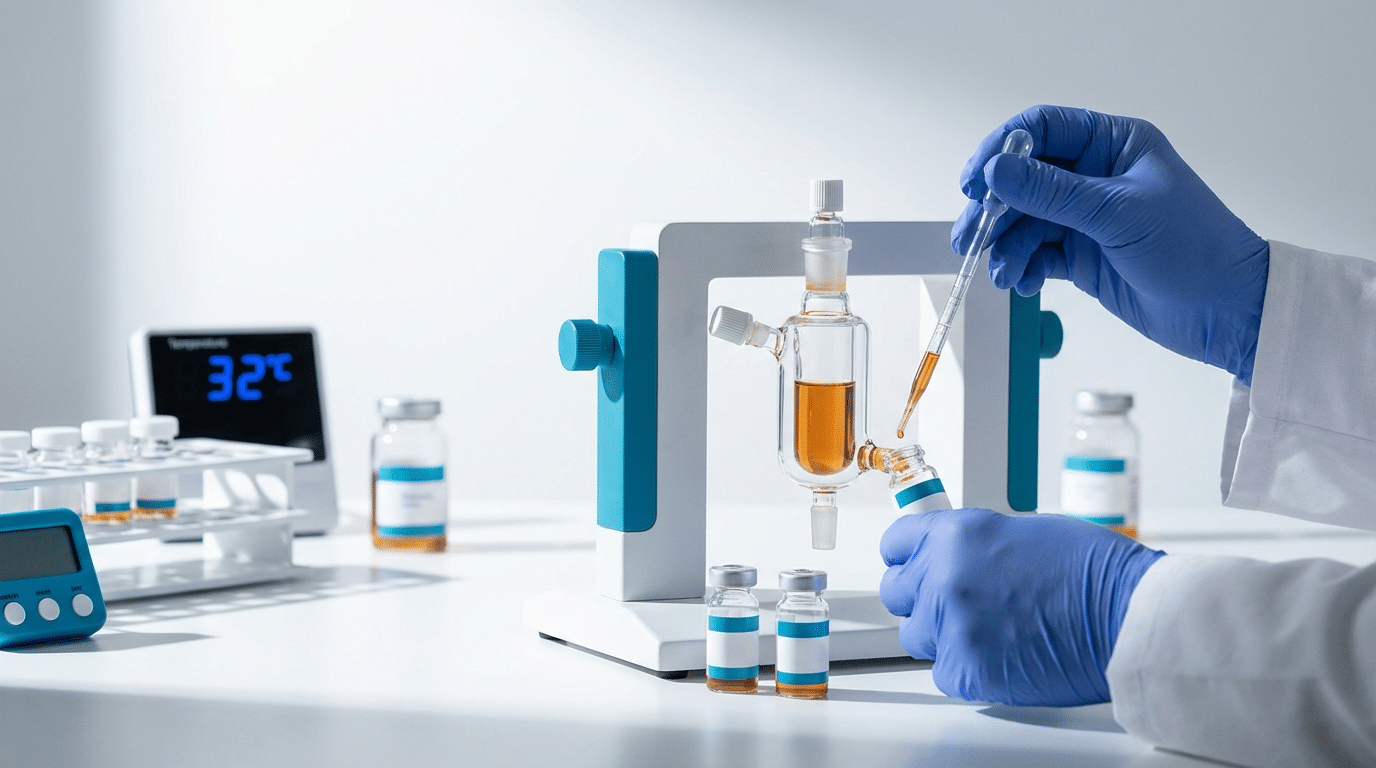
Comprehensive franz cell testing services go far beyond simply running cells in a water bath. A typical engagement includes protocol design, experimental execution, analytical quantification, and data interpretation — all tailored to the client’s formulation and regulatory objective.
The process begins with defining experimental conditions: maintaining the diffusion chamber and skin at a constant temperature (typically 32 °C for skin-surface simulation), selecting appropriate stirring speed, choosing the receptor medium (often phosphate-buffered saline with or without surfactant), and establishing sampling intervals that capture the full permeation curve. Once the experiment is complete, receptor samples are analyzed — usually by HPLC or LC-MS/MS — and the results are compiled into cumulative permeation curves, flux calculations, and formulation comparisons.
For companies developing topical products in Israel, Da-Ta Biotech Biological Laboratory Solutions provides this full suite of services, from initial feasibility discussions through final reporting, enabling clients to make data-driven decisions about their formulations.
Recommended Deliverables for Your Franz Cell Test Report
A robust report should include:
- Raw data tables alongside normalized values expressed as µg/cm²
- Cumulative permeation versus time graphs
- Steady-state flux plots for visual formulation comparison
- Clear summary of conclusions with scientific rationale
- Mass balance data accounting for drug in membrane, donor, and receptor
Who Benefits from Franz Cell Permeation Testing for Topical Formulations?
The range of organizations that rely on permeation testing is broader than many realize:
💊 Pharmaceutical Companies
Developing prescription topical medications — creams, gels, ointments, foams
🩹 Transdermal Patch Developers
Evaluating sustained-release drug delivery systems
✨ Cosmetic Companies
Making skin-penetration or bioavailability claims
🔬 Medical Device Manufacturers
Evaluating membrane transport properties
🚀 Biotech Startups
Securing investor confidence with early-stage permeation data
📋 Patent Filers
Supporting IP filings with quantitative delivery evidence
In Israel specifically, a growing ecosystem of biotech startups and established pharma firms is developing innovative topical and transdermal delivery systems. A well-designed Franz cell study can de-risk product development significantly at a fraction of the cost of an in vivo trial.
Selecting the Optimal Membrane: Artificial, Porcine, or Human Skin?
Membrane selection is not a trivial decision — it fundamentally determines what your experiment can and cannot tell you.
Synthetic Membranes
Polysulfone or cellulose acetate membranes are inert, reproducible, and eliminate biological variability. They are ideal for IVRT, where the goal is to assess drug release kinetics from the formulation matrix rather than skin barrier interaction. A validated static Franz diffusion cell system using synthetic membranes can provide highly reproducible release data.
Porcine Skin
Widely accepted surrogate for human skin because of histological and permeability similarities. It is more accessible than human tissue and provides a biologically relevant barrier for permeation studies.
Ex Vivo Human Skin
Typically dermatomed tissue from surgical procedures — offers the highest physiological relevance and is often required for pivotal regulatory studies. The choice of Franz cell hardware also matters: a jacketed cell, such as a 25.2 mm Franz Diffusion Cell, jacketed for Skin Absorption Test, helps maintain the constant 32 °C temperature critical for physiological relevance.
Determining a “Fit-for-Purpose” Protocol
Before selecting a membrane, ask two clarifying questions:
1. What needs to be measured — release from the vehicle, permeation across a biological barrier, or drug retention within the skin layers?
2. Is the goal to compare formulations head-to-head or to generate absolute permeation data for a regulatory submission?
The answers dictate whether IVRT with a synthetic membrane, IVPT with porcine skin, or a full IVPT with human skin is appropriate. A CRO experienced in designing fit-for-purpose protocols can help clients avoid over-engineering (wasting resources) or under-engineering (generating data that regulators will not accept).
What Can a Franz Cell Experiment Truly Infer About Transdermal Absorption?
A Franz cell provides powerful, controlled, and quantitative data — but it is important to understand its boundaries. The experiment tells you how much analyte crosses a defined membrane under controlled conditions. It does not directly predict systemic bioavailability in a living patient, because in vivo absorption is also influenced by local blood flow, enzymatic metabolism in viable skin layers, hydration state, and individual patient variability.
That said, IVPT data correlates meaningfully with in vivo performance for many drug classes, which is precisely why regulatory agencies accept it for bioequivalence determinations. Key metrics extracted from a well-run Franz cell experiment — cumulative amount permeated, steady-state flux, and lag time — allow researchers to rank formulations, evaluate permeation enhancers, and predict whether a molecule has viable transdermal absorption potential before investing in clinical studies.
Flux, Lag Time, and Kp: How Permeation Metrics Are Calculated
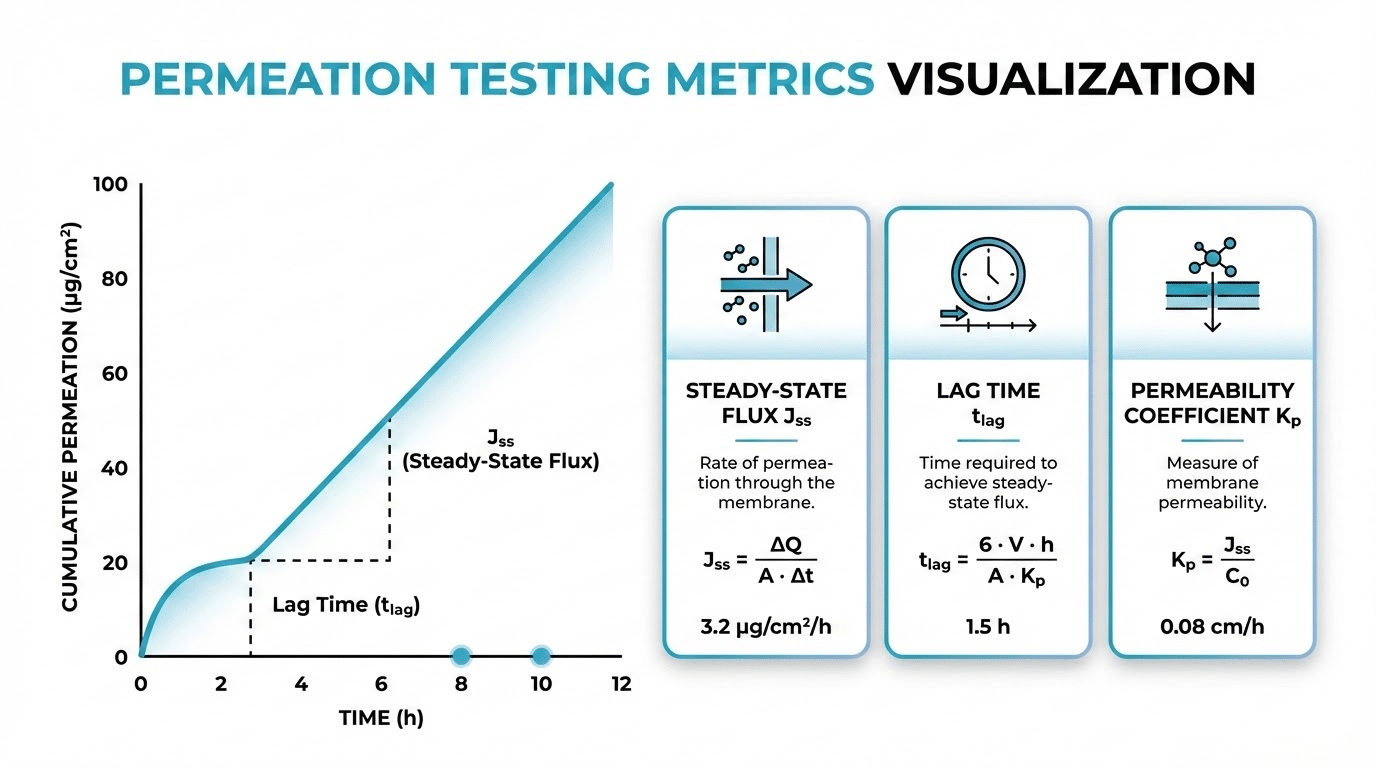
Permeation is quantified by analyzing the concentration of the active ingredient in receptor chamber samples collected at defined time points. These concentrations are converted to cumulative amounts per unit area (µg/cm²) and plotted against time.
Key Permeation Metrics Explained
Steady-state flux (Jss): The slope of the linear portion of the cumulative permeation curve — it represents the constant rate of drug transport once the system reaches equilibrium.
Lag time (tlag): Determined by extrapolating the linear region back to the x-axis; it reflects the time needed for the drug to establish a concentration gradient across the full thickness of the membrane.
Permeability coefficient (Kp): Normalizes flux by the applied concentration, allowing comparison across different experiments and drug concentrations.
Normalization by cell diffusion area is essential. Without it, comparisons between different Franz cell setups become meaningless. Da-Ta Biotech’s approach to permeation testing includes standardized area-normalized calculations across all studies, ensuring that data generated in one experiment is directly comparable to another — a practical advantage for clients running multi-phase formulation development programs.
Why Presenting Both Cumulative and Rate Data Matters
Cumulative permeation data answers “how much drug was delivered in total?” — critical for dose-adequacy assessments. Rate data (flux over time) answers “how does delivery behave temporally?” — essential for understanding whether a formulation provides rapid onset, sustained release, or an undesirable burst-then-plateau profile. — Dr. Rinat Borenshtain-Koreh, Da-Ta Biotech
A Common Mistake: Ignoring Sink Conditions in the Receptor Chamber
⚠️ Critical Warning: Sink conditions mean that the concentration of the analyte in the receptor fluid remains low enough (typically below 10–30% of its solubility) to maintain a driving concentration gradient across the membrane. If the receptor fluid becomes saturated or near-saturated, diffusion slows artificially, and the measured permeation rate no longer reflects the true barrier properties of the membrane.
Achieving sink conditions requires selecting a receptor medium in which the analyte is sufficiently soluble. For poorly water-soluble drugs, this may mean adding a surfactant or co-solvent to the receptor fluid. Alternatively, frequent replacement of receptor fluid (flow-through cell configurations) can maintain sink.
Failure to verify and document sink conditions is one of the most frequent sources of unreliable Franz cell data — and a red flag for regulatory reviewers.
How Is Skin Integrity Verified Before IVPT Studies?
Excised skin can be damaged during harvesting, storage, or mounting on the Franz cell. Damaged skin lacks its natural barrier function, leading to artificially high permeation rates that do not reflect real-world performance. Skin integrity testing before the experiment begins is therefore non-negotiable for credible IVPT.
📊 TEWL Measurement
Transepidermal Water Loss quantifies the rate of water vapor escaping through the skin — a high value indicates a compromised barrier.
⚡ Electrical Resistance
Measures the impedance of the stratum corneum — a low value signals damage. Specimens failing criteria must be excluded.
This quality gate is a hallmark of well-run franz cell testing services. Da-Ta Biotech incorporates skin integrity screening as a standard step in every IVPT protocol, ensuring that reported permeation values reflect genuinely intact barrier tissue — not artifacts of preparation damage.
How Many Replicates and Donors Ensure Robust IVPT Data?
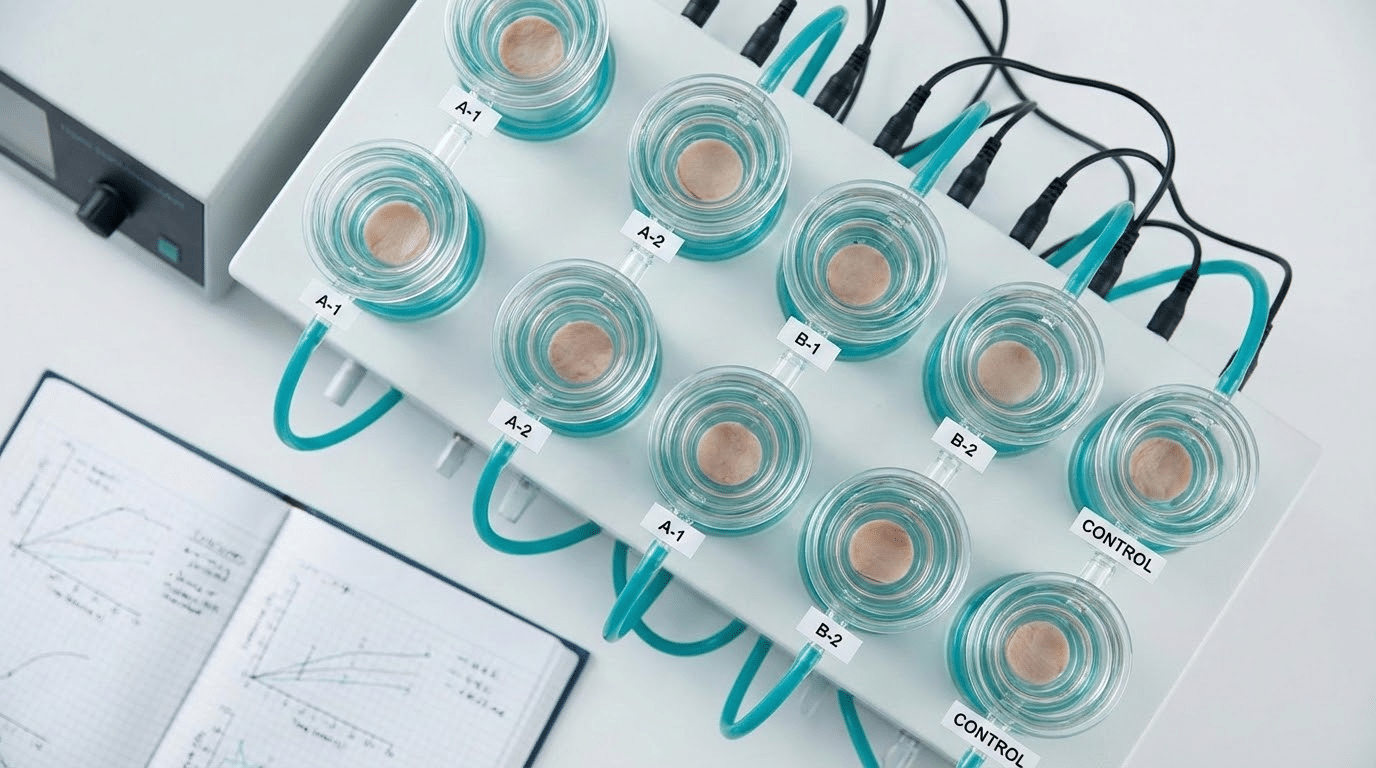
Biological variability between skin donors is inherent and unavoidable. The number of replicates (cells per donor) and the number of donors directly affect the statistical power and reliability of the study. Under-powering a study means that real differences between formulations may go undetected; over-powering wastes time and tissue.
✓ FDA Guidance Recommendation: The FDA guidance on IVPT for topical drug products submitted in ANDAs provides specific recommendations: typically, a minimum of ≥ 4–6 donors with multiple replicates per donor is expected for bioequivalence studies. For early-stage formulation screening, fewer donors may suffice — but the rationale must be documented.
Planning replicate numbers upfront, in consultation with a biostatistician or experienced CRO, prevents costly repeat studies later.
Versatility of Franz Cell Technology Across Formulation Types
Franz cell testing is not limited to one dosage form. The technology accommodates:
- Semi-solid formulations: creams, gels, ointments
- Liquid sprays and foams
- Transdermal patches with specialized adapters
Each product type may require adjustments to the experimental setup — infinite versus finite dose application, occlusion versus non-occlusion of the donor chamber, or specialized patch-holding adapters — but the underlying principle remains the same: measure analyte transport across a membrane under defined conditions.
Whether you are developing a lidocaine patch, a retinoid cream, or a CBD-infused topical, the same fundamental platform applies — with protocol modifications tailored to each product’s unique characteristics.
Bioanalytical Validation: The Analytical Foundation Beneath Every Franz Cell Study
Even a perfectly designed Franz cell experiment is only as good as the analytical method used to quantify the drug in receptor fluid samples. If the HPLC or LC-MS/MS method lacks adequate sensitivity, precision, or accuracy, the resulting permeation data is unreliable — and potentially unacceptable to regulators.
These validation parameters follow the principles outlined in the FDA M10 Bioanalytical Method Validation guidance. A CRO that develops and validates the analytical method in-house — rather than outsourcing it to a third party — can troubleshoot issues faster and maintain tighter quality control over the entire data chain.
Navigating Regulatory Aspects of In Vitro Permeation Testing in Israel
Companies conducting IVPT in Israel operate within a regulatory framework shaped by the Israeli Ministry of Health, which frequently adopts international standards from ICH, EMA, and FDA. For pharmaceutical products, the Pharmaceutical Division evaluates quality dossiers according to guidelines that incorporate these global standards. For cosmetics, import and testing requirements are governed by separate but related regulatory pathways.
💡 Local Expertise Advantage: Understanding whether your topical product will be classified as a drug or cosmetic in Israel affects which permeation data is required and how it must be documented. Import permits for raw materials and test samples also require advance planning. A testing partner with experience navigating Israeli regulatory pathways can streamline the process, reducing administrative delays that would otherwise stall laboratory timelines.
Scenario: When Your Formulation Fails Permeation Testing — What Next?
Not every Franz cell experiment yields the result you hope for. Sometimes the permeation rate is too low, the lag time too long, or there is no meaningful difference between your optimized formulation and the control. This is not failure — it is information.
Troubleshooting Checklist
First, review the data critically:
- Were sink conditions maintained throughout?
- Was skin integrity verified before dosing?
- Was the analytical method sensitive enough for low-permeating compounds?
If the experiment was sound, the data points toward formulation adjustments — increasing permeation enhancer concentration, changing vehicle viscosity, or exploring alternative delivery strategies such as microneedling-assisted permeation.
Da-Ta Biotech approaches these situations as a scientific partner, not merely an executor. When results deviate from expectations, the team works with clients to interpret the data, identify root causes, and recommend next steps — whether that means reformulation guidance, modified protocols, or complementary cell-based assays to investigate skin metabolism or irritation potential.
Benchmarking Your Permeation Data: How to Compare Formulations Meaningfully
Comparing two or more formulations in a Franz cell study requires careful experimental design to isolate the variable of interest. All other parameters — membrane source, receptor medium, temperature, dose applied, sampling schedule — must be held constant.
Best Practices for Valid Comparisons: Randomization of cell positions within the heating manifold and blinding of analysts to formulation identity strengthen validity. Statistical analysis should be pre-specified: paired or unpaired t-tests for two-formulation comparisons, ANOVA for multi-arm studies. Reporting confidence intervals alongside p-values gives a richer picture of the magnitude and certainty of any observed difference.
Frequently Asked Questions About Franz Cell Testing Services
Ready to Generate Reliable Permeation Data for Your Next Topical or Transdermal Product?
Whether you are screening early-stage formulations, preparing a bioequivalence dossier, or need to troubleshoot unexpected permeation results, the right testing partner makes the difference between data that advances your program and data that raises more questions than it answers.
What scientific challenge does your current formulation present — and how can a tailored Franz cell study help you solve it? Come to us with your permeation testing needs. — Da-Ta Biotech R&D Team